

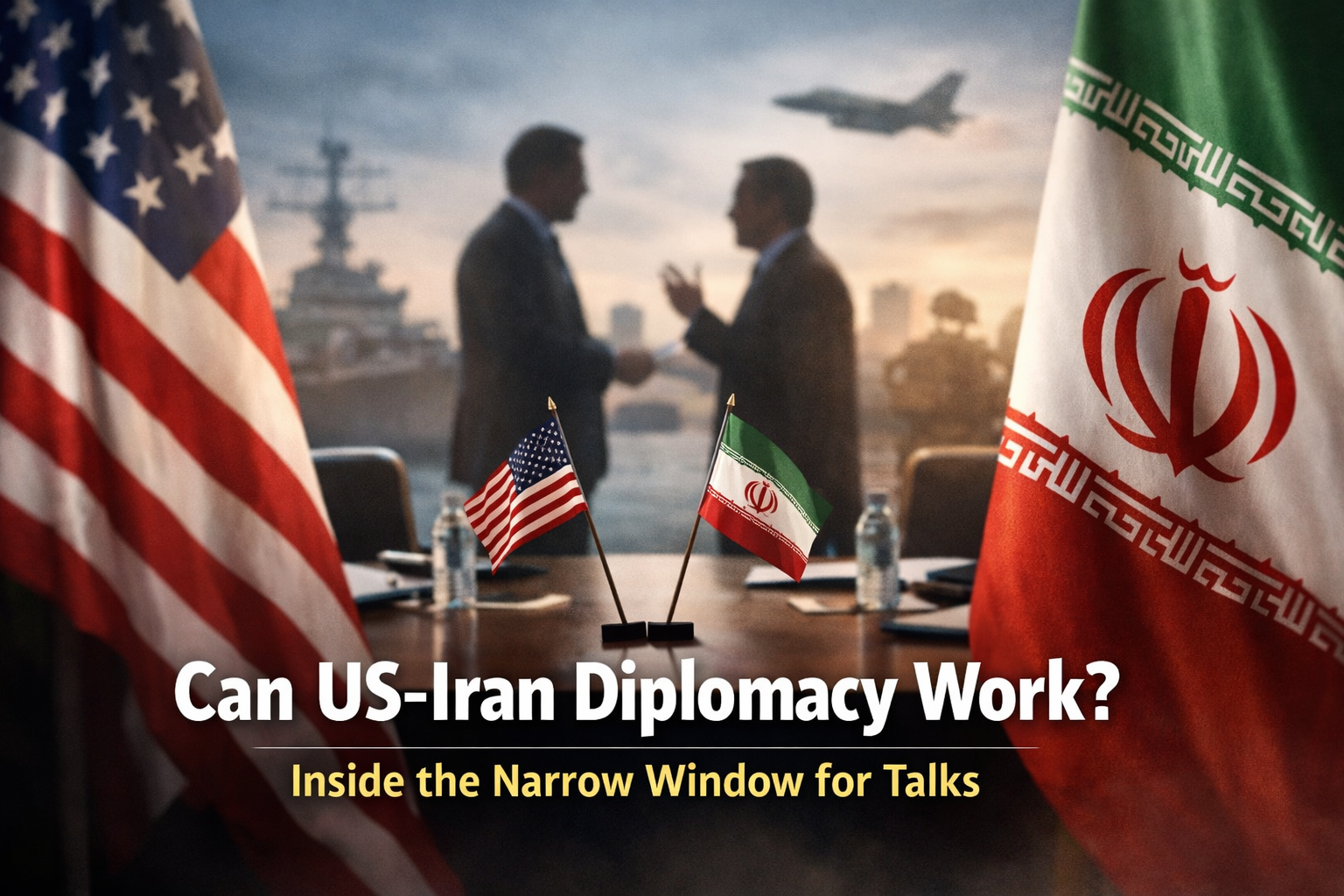
Tehran, Iran — In Tehran, the debate is no longer about whether diplomacy has begun. The real concern now is whether it can move quickly enough to prevent further escalation between Iran and the United States.
According to an Iranian official familiar with the process, Oman has been finalised as the location for the next round of indirect talks between Tehran and Washington. The discussions are expected to take place later this week, at a time when tensions across the region remain dangerously high.
The official confirmed that, for now, no additional regional countries will formally join the negotiations. While several neighbouring states have offered to participate, Iran prefers a limited format at this early stage.
Tehran’s hesitation, the official said, is not about excluding others. Instead, Iranian decision-makers fear that expanding the table too soon could slow progress and turn sensitive negotiations into a political spectacle rather than a focused effort to reduce tensions.
Iran’s priority is to stabilise the dialogue with the United States first. Only once a clear framework is established would broader regional involvement make sense, the source added.
However, regional mediators see the situation differently. Several Gulf and regional states believe their role may eventually go beyond facilitation. Given how deeply their own security is tied to US-Iran relations, they view themselves as potential guarantors of any future agreement.
This moment marks a sharp departure from the 2015 nuclear deal. That agreement was largely built around arms control and sanctions relief. In 2026, the standoff has taken on a more openly military character, with naval deployments, drills, and warnings dominating headlines.
Regional actors are no longer distant observers. Any conflict between Iran and the United States would directly affect their economies, energy routes, and internal stability. For them, de-escalation is not a diplomatic preference but a strategic necessity.
Recent diplomatic activity reflects this urgency. In late June, Ali Larijani, head of Iran’s Supreme National Security Council, travelled to Moscow for talks with Russian President Vladimir Putin. Shortly afterwards, Iran’s Foreign Minister Abbas Araghchi held meetings in Istanbul with regional counterparts.
Momentum continued over the weekend when Qatar’s Prime Minister, Sheikh Mohammed bin Abdulrahman bin Jassim Al Thani, visited Tehran. Following these discussions, Larijani publicly indicated that a more structured negotiating framework was beginning to emerge.
Sources close to the process suggest the talks are not aimed at a temporary or symbolic arrangement. Instead, negotiators are quietly working toward a comprehensive roadmap — one that could address security concerns, sanctions, and regional stability in a single framework.
Whether this narrow diplomatic window remains open now depends on timing, trust, and restraint on both sides. With military risks rising, the coming days may determine whether diplomacy can still outrun escalation.
